
What is the Difference Between House Washing and Pressure Washing?
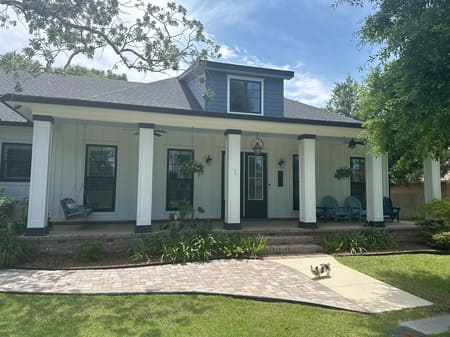
Along the Gulf Coast, most “dirty siding” is not just dirt. It’s a mix of humidity-fed algae, mildew, pollen, and a light salt film that builds up after weeks of warm air and afternoon storms. That’s why homeowners often get conflicting advice when they search for “pressure washing” and see “house washing” recommended instead.
Here’s the real difference in plain terms: house washing is a low-pressure cleaning method built for siding and other delicate exterior materials. It relies on the right detergents and controlled rinsing to remove organic growth without damaging your home. Pressure washing is a higher-pressure method meant for tougher surfaces like concrete, brick, and some stone, where force is helpful and risk is lower.
If your goal is a clean exterior without cracked caulk, chipped paint, or water getting where it shouldn’t, a professional house washing service is the right starting point.
How Gulf Coast Homeowners Should Think About these terms
Companies and even homeowners use these phrases interchangeably, so it helps to know what you’re actually booking.
- House washing: A siding-safe process that applies cleaners at low pressure, lets them do the work, then rinses gently for an even finish. This is the go-to for vinyl, fiber cement, painted surfaces, soffits, fascia, and most trim.
- Pressure washing: Higher-pressure water used to remove buildup from durable surfaces such as driveways, sidewalks, patios, and certain masonry. It’s a tool, not a default setting for an entire property.
- Soft washing: The technique behind modern house washing. Low pressure plus targeted cleaning agents that break down algae and mildew so they rinse away without the “blasting” effect.
In other words, house washing is about safe results on exterior finishes. Pressure washing is about performance on hard surfaces.
Why This Matters More in South Alabama and Northwest Florida
Our climate changes the way exterior cleaning should be done. The same method that works in a dry inland area can cause problems here because surfaces stay damp longer and growth comes back faster.
Salt, heat, and humidity create a perfect environment for algae and mildew. If growth is left alone, it can stain siding, hold moisture against paint and trim, and accelerate the dingy look that makes a home feel older than it is. House washing treats the organic layer and helps your exterior stay cleaner longer, especially on north-facing or shaded sides of the home.
Which Method is Right for Each Surface?
The safest approach is matching the cleaning method to the material. Here’s a practical guide homeowners can trust:
- Vinyl and fiber cement siding: House wash (soft wash). Helps avoid seam damage, oxidation issues, and striping.
- Painted trim, soffits, and fascia: House wash (soft wash). Removes mildew without lifting paint or caulk.
- Stucco and EIFS: Soft wash only. These surfaces can pit, scar, or absorb water when hit with high pressure.
- Brick, block, and certain stone: Often a mix. Some areas may tolerate pressure, but many homes still need a gentle approach to protect mortar and prevent streaking.
- Concrete driveways and sidewalks: Pressure washing typically makes sense here when done with the right technique.
- Composite decking and rails: Usually soft wash to protect the finish and avoid visible striping.
A good rule for homeowners: if it’s painted, sealed, caulked, or has seams, it usually shouldn’t be cleaned with high pressure.
What Can Go Wrong When Siding is Pressured Washed?
Most homeowners are not worried about “psi.” They’re worried about what happens after the wash: water spots, peeling paint, loose trim, leaks, or something that looks worse than before. Those concerns are valid.
High pressure can push water behind siding and into gaps around windows, doors, and soffits. In a humid coastal climate, trapped moisture can lead to swollen wood, peeling paint, and moldy smells in worst-case situations. Too much pressure can also:
- Tear window screens and damage seals around glass
- Etch softer surfaces (especially stucco)
- Leave uneven “wand marks” on siding
- Strip paint, loosen caulk, or force water into small cracks
What a Professional House Wash Should Include
Homeowners don’t hire a service just to “spray the house.” They hire it to get a safe, even result without headaches. While every company has its own workflow, a quality house wash typically includes:
- A walk-around to identify siding type, oxidation, worn paint, and problem areas
- Protection for landscaping and nearby items (doors, outlets, outdoor furniture when needed)
- Low-pressure application of the right cleaning blend for organic growth and coastal film
- Proper dwell time so the cleaning agents can break down algae and mildew
- A controlled rinse that leaves the finish uniform, not streaky
You’re not paying for force. You’re paying for a method that delivers results while protecting your home. Soft washing protects exterior finishes while removing the growth that actually causes the discoloration.
How Often Should Gulf Coast Homes Be Washed?
Most homeowners in Northwest Florida and South Alabama schedule house washing about once per year, but the best frequency depends on your property. Homes near open water, surrounded by trees, or shaded most of the day often need cleaning sooner. If you have sprinklers hitting the siding or a north wall that stays damp, algae tends to show up faster.
Consider a wash when you notice:
- Green tint or black streaks on siding or trim
- Dark lines under soffits and eaves
- Dingy siding that looks worse after rain
- Pollen buildup that seems “stuck” even after storms
A professional evaluation should give you a realistic schedule based on your home’s exposure, not a generic sales pitch.
House Washing, Pressure Washing, and Power Washing: What’s the Difference?
These terms get mixed together online, so here’s a homeowner-friendly breakdown.
House washing is siding-safe cleaning, using soft wash practices. Pressure washing uses higher pressure on durable surfaces. Power washing is often used as a synonym for pressure washing, and sometimes it implies heated water. For most house exteriors, heat is not necessary, and high pressure is not the goal. The important part is having a company that uses the method that cleans without shortening the life of your paint, caulk, or siding.
Questions to Ask Before Hiring a Company
Most problems happen when a provider uses the same approach on everything. These questions help you avoid that.
- Do you use a soft-wash process for siding, soffits, and trim?
- How do you protect plants, outdoor fixtures, and furniture during the wash?
- What cleaners do you use, and how do you prevent residue on windows and landscaping?
- How do you handle stucco, painted surfaces, and older caulk lines?
- Do you have recent work in coastal neighborhoods similar to mine?
If the answers focus only on “high psi,” “turbo tips,” or “blasting it clean,” that’s a sign you may not be getting a siding-safe service.
Where Pressure Washing is Still the Best Tool
Pressure washing has a real place on a well-maintained property. It’s often the best option for:
- Concrete driveways and sidewalks
- Some patios and pool decks (depending on the surface)
- Curbs, gutters on the ground, and certain masonry areas
- Brick or stone features when done carefully
Many professional visits include both methods: soft washing for the home itself and pressure washing for the hardscape. The reason the house is treated differently than the driveway is simple: the materials demand it.
Why Choosing the Right Method Saves Money Long-Term
Coastal weather wears surfaces down faster. When the wrong cleaning method strips paint, cracks caulk, or drives water into gaps, you can end up paying for repairs that cost far more than the cleaning itself. A soft-wash house cleaning helps keep finishes intact, reduces recurring staining, and supports longer paint and siding life.
A clean exterior is not just curb appeal. It’s also a practical way to protect what you’ve already invested in.
Why Choose Sunshine Pressure Washing for Your Home
Homes along the Gulf Coast require a different mindset. Our team works with local conditions in mind, including salt exposure, long humid stretches, and the way algae forms on shaded walls and soffits. We tailor the approach to your siding and trim so you get a safe, even clean that holds up through the season.
If you want a siding-safe clean, schedule your professional house washing service with Sunshine Pressure Washing. Have questions about timing, methods, or what your home’s exterior needs? Call 850-723-3100 and we will help you map out the right plan.
Ready for a Clean Home Exterior?
If your siding has streaks, green growth, or that dull coastal film, it’s time for a proper wash. Book service with Sunshine Pressure Washing and enjoy a brighter exterior without the worry of damage. You can also explore our other services or call 850-723-3100 to get a recommendation based on your home’s materials and exposure.